
A Review of: An Emergent Security Risk: Critical Infrastructures and Information Warfare, by BG Pye and MJ Warren, JIW, Volume 8, Number 3, Published 2009

A Review of: An Emergent Security Risk: Critical Infrastructures and Information Warfare, by BG Pye and MJ Warren, JIW, Volume 8, Number 3, Published 2009
This paper has also stood up to the test of time over the years, as these Australian academics accurately forecast the dangers to Industrial Control Systems (ICS) from a cybersecurity aspect. They were prescient when you realized how critical infrastructure such as electrical, HVAC, water, and lighting instances would all become interconnected as Facility Related Control Systems (FRCS), and the danger that would occur. In most cases, these Operational Technology (OT) devices were never meant to be accessed remotely, as availability is the overriding concern, vice confidentiality in the IT realm. And yet two decades after this paper was published, one can see a proliferation of hacks occurring in the exact same manner as was forecast in this paper.
These authors understood that moving forward, as Information Technology (IT) grew from a capability convenience aspect, the barriers to integrating new features would be lowered significantly. Traditionally, one could only operate these different systems at their locations, such as at electrical power plants, dams, and other discrete buildings that used physical protection methodologies as the first line of defense. In addition, there were other barriers to access, including proximity, technical expertise, and even gates, that gave a sense of security that these ICS were protected.
Those concepts are no longer viable with the inter-linking of FRCS systems, with new software that allows the operators to remotely access the systems from anywhere on the planet giving them complete access. In addition, because many of these OT systems are proprietary (in other words, owned and developed by companies such as Siemens, Johnson Controls, and Honeywell), the facility owners or technicians are not even allowed to touch any of this company-owned hardware and software, so they are beholden to the vendor. In most cases, the only way to ensure the cybersecurity requirements in these scenarios is in the contract itself, which is not a proactive process.
The other part of this paper that is still very relevant is how the loss of any of these Internet of Things (IoT) can quickly affect the human mind. Imagine if you do not have access to heat, air-conditioning, water, or electricity…and how you would cope in those circumstances. A good example now is the current Russia-Ukraine conflict, where the former are deliberately targeting the Ukrainian power grid in the winter, to undermine the willpower and stamina of the population. The authors forecast these Information Warfare (IW) effects and suggested a number of viable techniques and strategies to prevent these attacks in the future. The only one that we thought may have been not realistic was the focus on physical distance as a deterrent, as the Internet has demonstrated to everyone that you can be hacked or attacked from anywhere on the planet.
AUTHORS
Peregrine Technical Solutions, LLC Yorktown, VA
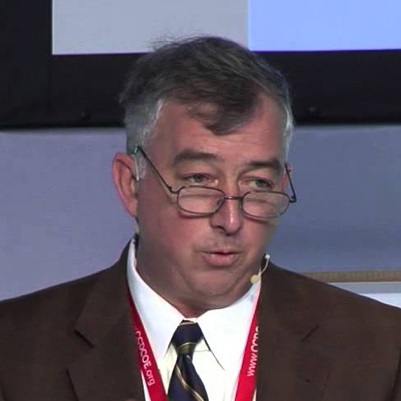
Dr. Leigh Armistead is the President of Peregrine Technical Solutions, a certified 8(a) small business that specializes in cyber security, and the Chief Editor of the Journal of Information Warfare. He graduated from the U.S. Naval Academy (1984), earned a master’s degree in Military History from Old Dominion University (1993), and a doctorate in Computer and Information Science from Edith Cowan University (2009). His major field of study is cyber power. He has published three books—all of which focus on the full spectrum of information warfare. He founded the International Conference on Cyber Warfare and Security, and the Vice-Chair Working Group 9.10–ICT Uses in Peace and War. He is a retired Naval officer.
Published In
Keywords
Journal of Information Warfare
The definitive publication for the best and latest research and analysis on information warfare, information operations, and cyber crime. Available in traditional hard copy or online.
Quick Links
Archive
